
Industry in Osaka
Growth Industries in Osaka
Osaka is home to a well-balanced mix of diverse industries, with a particularly strong concentration of companies boasting robust supply chains.
The following are key growth industries in Osaka, many of which showcased advanced technologies at Expo 2025 Osaka, Kansai, Japan.
-

Startups
- ●Building on networks among industry, academia, government, and financial institutions established through events such as Global Startup Expo (GSE), Osaka is strengthening collaboration across the Kyoto-Osaka-Kobe region and internationally to develop a globally competitive deep-tech startup ecosystem.
-
Life Sciences
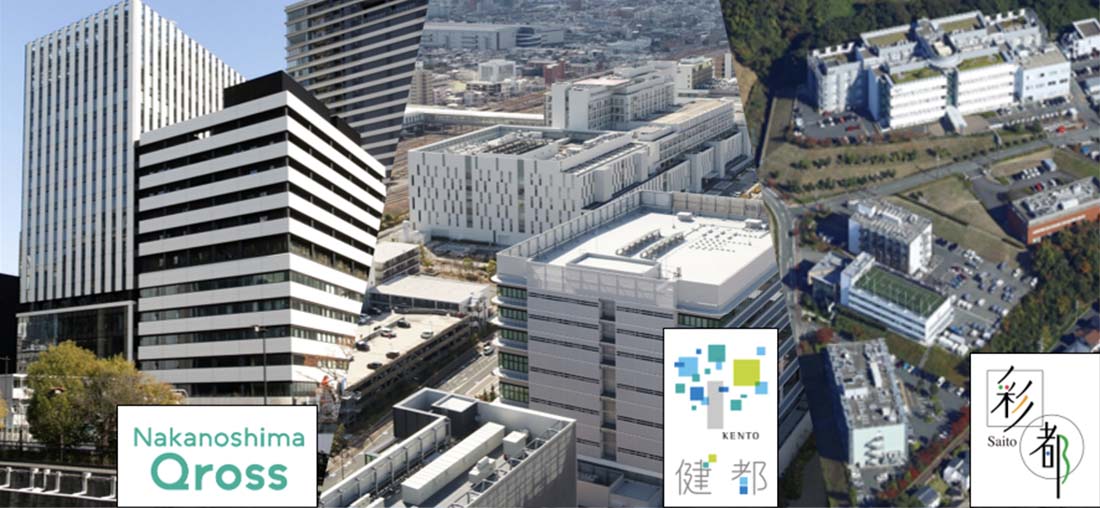
- ●Osaka is home to three major life sciences hubs: Nakanoshima Qross (regenerative medicine and related fields), KENTO (healthcare and medical services), and Saito (drug discovery). In particular, Nakanoshima Qross promotes the commercialization of future medicine, including regenerative medicine using iPS cells.
-

Carbon Neutrality
- ●Leveraging its concentration of carbon neutrality-related industries and research institutions, Osaka promotes the commercialization of technologies through business matching and other support services at CN Business Base.
-
Flying cars (eVTOL)
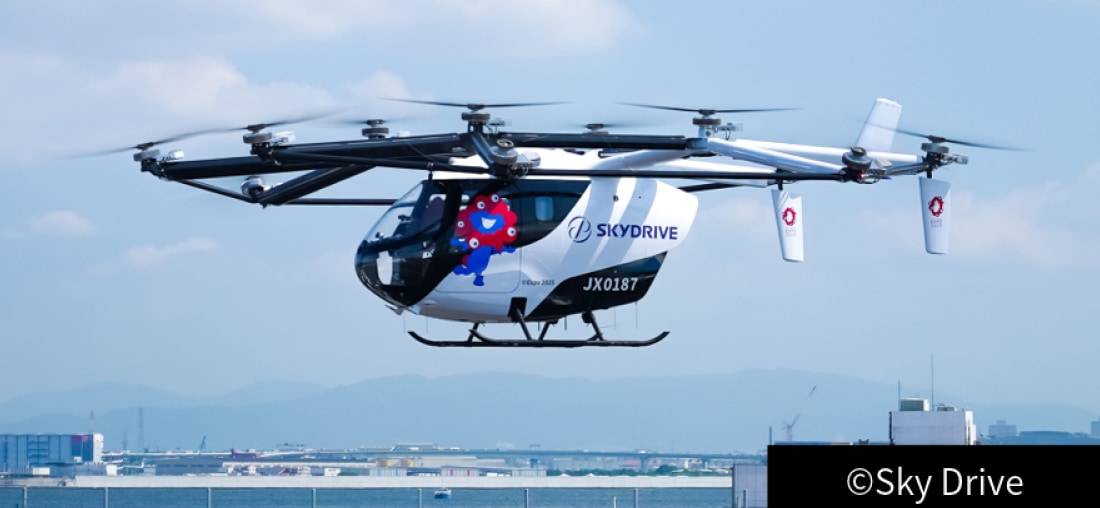
- ●To realize a revolution in air mobility originating from Osaka, the city is supporting private-sector commercialization efforts and developing a favorable business environment to enable commercial operations of flying cars and expand their operational networks.
-
Robotics and AI
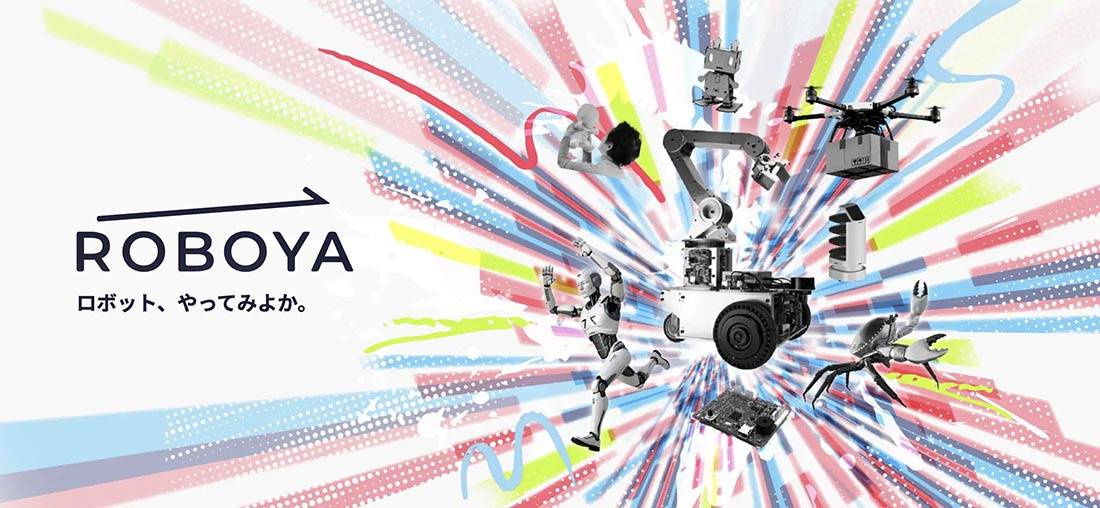
- ●Anticipating market growth in fields such as service robotics, Osaka is creating an open development environment and supporting a wide range of businesses and organizations in entering and expanding their operations in the robotics industry.


Companies Promoting the SDGs
Osaka Prefecture has adopted the Osaka SDGs Action Charter to raise awareness of the SDGs among all stakeholders, including companies, organizations, and residents, and to turn that awareness into concrete action.
In line with the Charter, the Prefecture runs the My SDGs Declaration Project, in which participants declare the actions they will take toward the SDGs, and introduces the companies that have joined it.
Living Environment
Although Osaka is a major city, the costs of doing business and living here are relatively low compared with Tokyo and other major Asian cities. Osaka has also consistently ranked near the top of global liveability rankings in recent years, placing 7th in the world (and 1st in Asia) in the Economist's Global Liveability Index 2026.
Osaka is highly regarded around the world as a city, and it offers an excellent living environment.

Global Liveability Index 2026 (Top 10)
| Rank | City (Country) | Overall | Stability | Healthcare | Culture & Environment | Education | Infrastructure |
|---|---|---|---|---|---|---|---|
| 1 | Copenhagen (Denmark) | 98 | 100 | 96 | 95 | 100 | 100 |
| 2 | Vienna (Austria) | 97 | 95 | 100 | 94 | 100 | 100 |
| 3 | Melbourne (Australia) | 97 | 95 | 100 | 96 | 100 | 96 |
| 4 | Sydney (Australia) | 97 | 95 | 100 | 94 | 100 | 96 |
| 5 | Zurich (Switzerland) | 96 | 95 | 100 | 94 | 100 | 96 |
| 6 | Geneva (Switzerland) | 96 | 95 | 100 | 92 | 100 | 96 |
| 7 | Osaka (Japan) | 96 | 100 | 100 | 87 | 100 | 96 |
| 8 | Adelaide (Australia) | 96 | 95 | 100 | 91 | 100 | 96 |
| 9 | Vancouver (Canada) | 96 | 95 | 96 | 97 | 100 | 93 |
| 10 | Tokyo (Japan) | 96 | 100 | 100 | 89 | 100 | 93 |
Source: Economist Intelligence Unit, 2026
Costs Compared with the World
-
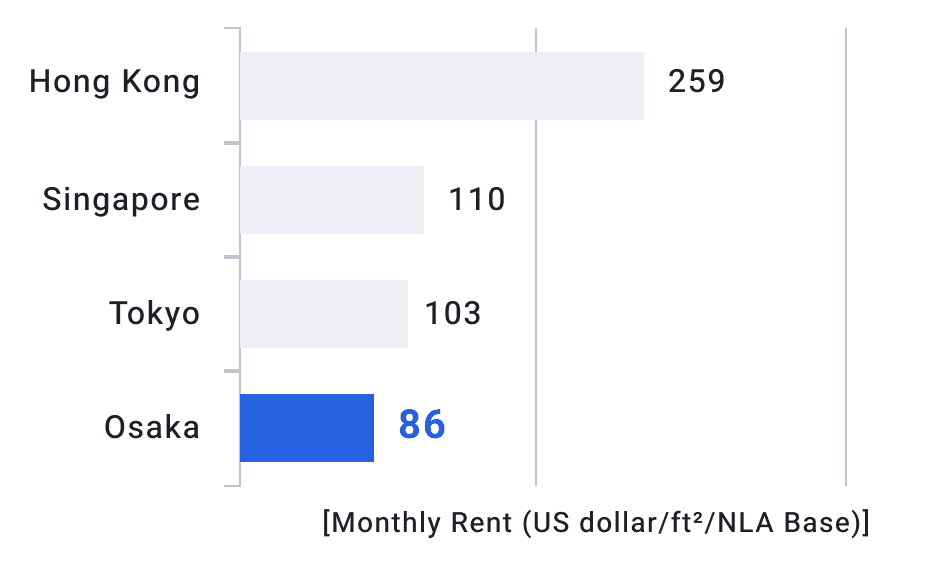
Office rents of major domestic and international cities 1
Approximately one-third cheaper than in Hong Kong
-
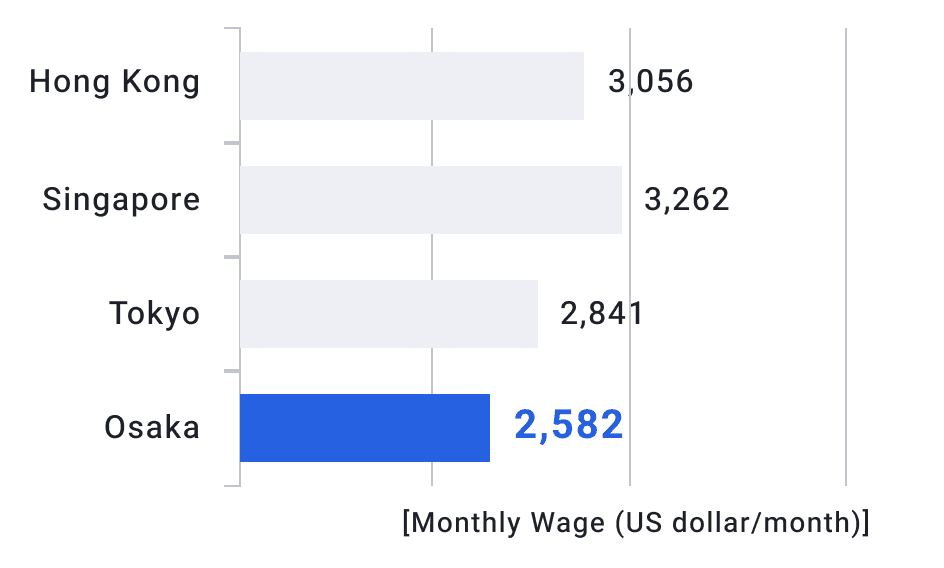
Wages of non-manufacturing staff (general employees) by major cities 2
Approximately 20% less than in Singapore
-
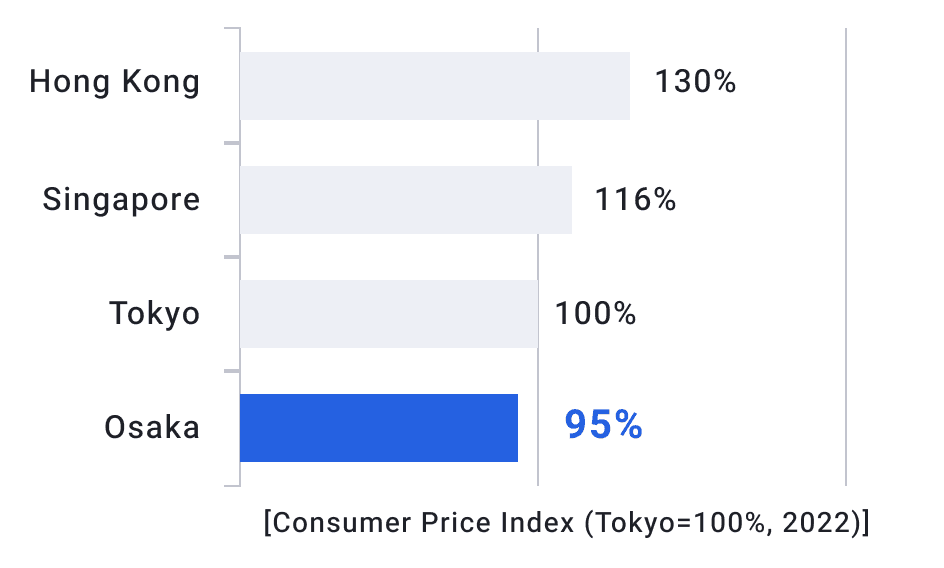
Consumer price index of major domestic and international cities 3,4
Approximately 30% less than in Hong Kong


Sources:
- JLL’s “Premium Office Rent Tracker” 2023
- Japan External Trade Organization (JETRO), “Survey on Investment-Related Costs”
- Compiled from Statistics Bureau of Japan, “Statistical Handbook of the World” (2024)
- Compiled from Ministry of Internal Affairs and Communications, “Regional Difference Index of Consumer Prices” (2023)
Osaka at a Glance
| Population(thousands) | GRP(US$100M) | Businesses | Universities | Research institutes |
|
|---|---|---|---|---|---|
| Osaka | 8,806 | 3,625 | 446,119 | 58 | 18,814 |
| Tokyo | 14,010 | 9,654 | 728,710 | 143 | 43,070 |
| Kansai | 20,439 | 7,768 | 923,036 | 152 | 37,225 |
| Japan | 125,502 | 49,548 | 5,926,804 | 807 | 232,305 |
Sources:
- Ministry of Internal Affairs and Communications, “Population Estimates 2021”
- Osaka Prefecture, “Naniwa Economic Data 2021”
- Statistics Bureau of Japan, “2014 Economic Census for Business Frame”
- Ministry of Education, Culture, Sports, Science and Technology, “School Basic Survey 2022”

Gateway to the World
Osaka serves as a gateway connecting Japan with Asia and the rest of the world.
Its hub, Kansai International Airport, is linked to 89 cities in 25 countries and regions, and because it operates 24 hours a day, it also offers extensive international cargo services.
International Routes
Winter 2019 schedule
- North America & Hawaii
- 42/week
- Asia
- 1,286/week
- Europe
- 30/week
- Middle East & India
- 11/week
- Oceania & Guam
- 40/week

Osaka's Extensive Transport Infrastructure
-

Airports
(2)Kansai International Airport (open 24 hours)
Domestic
70flights/day
(17 cities)International
1,553flights/week
(17 cities)Osaka International Airport (Itami)
Domestic
185flights/day
(26 cities) -

Rail
Shinkansen trains per day
at Shin-Osaka Station (avg.)378 trains
Conventional lines
484 stations
JR, Osaka Metro, Hankyu, Hanshin, Keihan, Kintetsu, Nankai, and more
-

Roads
Urban expressways
Total length
154.2km
General roads
Total length
15,900km
